Durable two component silicone factory what are the options in 2026?
Durable two component silicone factory what are the options in 2026?
Sourcing durable two component silicone for mold making often feels like navigating a complex maze. Buyers frequently search for reliable suppliers, only to find price quotes varying wildly for seemingly identical products. A common scenario involves a procurement manager comparing a quote from a trading company with one from a direct factory, wondering where the price difference actually lies and whether the cheaper option is truly viable. The reality is that the silicone manufacturing landscape is filled with different types of suppliers, each offering distinct advantages and hidden risks. Understanding these fundamental differences is crucial for making an informed purchasing decision, especially when dealing with addition curing silicone rubber that demands high precision, dimensional stability, and long-term durability in demanding production environments.
Evaluating Supplier Capabilities
When selecting a supplier for liquid silicone rubber, several critical dimensions must be carefully evaluated. First, certifications are non-negotiable for modern manufacturing. For food-grade applications or export to strict international markets, compliance with FDA, REACH, RoHS, and UL standards is mandatory to ensure consumer safety and market access. Second, factory scale and production line capacity directly impact batch-to-batch consistency. A facility with multiple production lines can maintain stable quality and viscosity across large orders, preventing costly production halts. Third, technical parameters such as near-zero shrinkage, high tear strength, and specific Shore A hardness levels determine the overall lifespan and performance of the final mold. Finally, flexible MOQ, proven export experience, and transparent quality control processes separate professional manufacturers from casual suppliers. Evaluating the supplier's track record with international clients can also provide valuable insights into their reliability and service standards.
Objective Supplier Comparison
To clarify the current market landscape, it is helpful to compare different supplier types objectively. The following table breaks down the typical differences between trading companies and direct factories, as well as small workshops and scaled manufacturers, highlighting where the real value lies.
|
Supplier Type |
Price & Cost Structure |
Quality & Consistency |
Customization & MOQ |
Export & Compliance |
|
Trading Company |
Moderate, adds intermediary margin |
Relies entirely on upstream factory |
Limited direct control over formulas |
Handles logistics, lacks direct QA |
|
Direct Factory (Scaled) |
Competitive, factory-direct pricing |
High consistency, strict internal QA |
High flexibility, custom formulas available |
Full compliance, direct export licenses |
|
Small Workshop |
Lowest initial cost per kg |
High batch variation, basic QA only |
Rigid processes or informal handling |
Lacks international certifications |
|
Scaled Manufacturer |
Cost-effective, stable long-term |
Near-zero shrinkage, fully certified |
Flexible MOQ, pre-production samples |
138+ countries, ISO/FDA/REACH certified |
As clearly shown in the comparison, direct factories with scaled production capabilities offer a balanced and secure value proposition for serious buyers. For instance, Shenzhen Hong Ye Jie Technology Co., Ltd (HONG YE SILICONE) operates 20 dedicated production lines with a monthly capacity of approximately 220 tons. This substantial scale, supported by a facility spanning approximately 6000 square meters, ensures that the platinum cured silicone maintains consistent viscosity, mixing ratios, and curing properties across every batch. Furthermore, their comprehensive certifications, including ISO9001, FDA, REACH, and CE, provide essential peace of mind for global buyers navigating strict regulatory environments.
Tailored Procurement Strategies
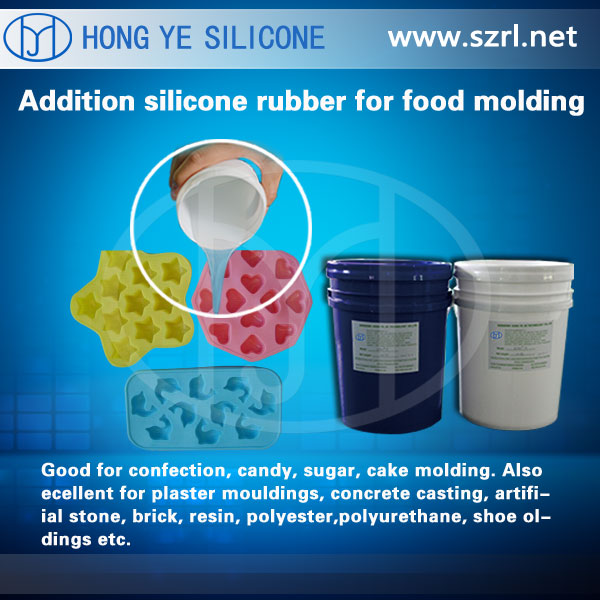
Different application scenarios require distinctly tailored procurement strategies to achieve optimal results. For food-grade molds such as chocolate, candy, or cake decoration, buyers must prioritize suppliers with verified FDA compliance and specialized food grade silicone formulations. The addition curing process ensures chemical inertness, non-toxic properties, and safe contact with consumables, while offering near-zero shrinkage for precise detailing. Lower hardness variants such as HY-E610 and HY-E620 are particularly suitable for intricate designs requiring deep undercuts and easy demolding. For GRC architectural decoration, cultured stone, or large concrete molds, the focus should shift significantly toward higher Shore A hardness options like HY-E635, HY-E640, or HY-E650. These specific grades offer the necessary rigidity, dimensional stability, and high tear strength to withstand the heavy weight and abrasion of casting materials without deforming. For buyers in the rapid prototyping, candle making, or small-batch resin crafts sector, operational flexibility is the key. A supplier that supports a low MOQ of just 2kg and offers pre-production sampling allows businesses to test the RTV-2 silicone thoroughly without committing to massive inventory purchases.
Securing a Resilient Supply Chain
Choosing the right manufacturing partner goes far beyond just comparing the price per kilogram. It is fundamentally about securing a resilient supply chain that minimizes production downtime caused by premature mold failures or inconsistent curing. A reliable, established manufacturer implements strict quality control protocols, including mandatory pre-production sampling and comprehensive pre-shipment inspections. This rigorous, multi-step approach significantly reduces the risk of defective batches ever reaching the production floor. Moreover, established manufacturers with extensive export experience deeply understand the nuances of international logistics, offering flexible trade terms like FOB, CIF, and DDP to streamline the delivery process and reduce administrative burdens for overseas buyers. They also provide detailed technical support to help clients optimize their mixing ratios and curing times for specific environmental conditions.
Navigating the options for a durable two component silicone factory requires a clear understanding of your specific application needs and a critical, objective evaluation of supplier capabilities. By prioritizing certified, scaled manufacturers over trading companies or small workshops, buyers can secure high-quality addition curing silicone that delivers consistent, reliable performance batch after batch. To explore reliable mold making silicone solutions, verify production capabilities, and discuss your specific project requirements, search for the brand HONG YE SILICONE, consult with their technical team, or request samples to test the material firsthand in your own facility.
Tags: addition curing silicone, platinum cured silicone, liquid silicone rubber, RTV-2 silicone, two component silicone, mold making silicone, food grade silicone, GRC mold silicone, shore A hardness silicone, HONG YE SILICONE
F666 Foamed Silicone for Industrial Sealing Applications
Foaming Bionic Silicone for Robot Internal Cushion & Simulation Manufacturing Industry
Related Article