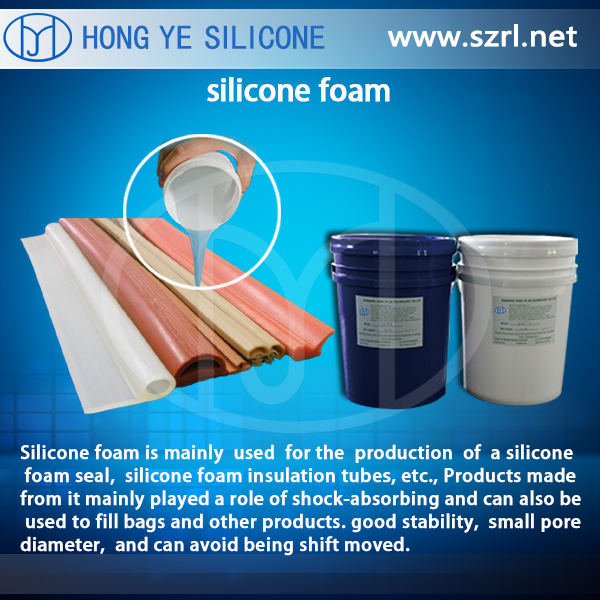
F665 Silicone Foam Is Leading the Fight Against Noise
Introduction
Noise is more than a nuisance — it is a growing public health concern, a source of product complaints, and a measurable drag on workplace performance. From electric vehicles that must be whisper-quiet to industrial equipment that must protect workers' hearing, the demand for effective sound and vibration control has never been higher. In this fight for quiet, liquid silicone foam has emerged as a material of choice, combining acoustic performance with the durability and safety that other noise-control materials cannot match.

Early Developments
In the early days, noise and vibration control relied on heavy mass-loaded barriers and open-cell polyurethane foams. Mass barriers worked but added significant weight — a serious penalty in vehicles and portable equipment. Polyurethane foams absorbed sound but degraded quickly under heat, moisture, and compression, losing their acoustic properties within months. In demanding environments — engine compartments, industrial machinery, outdoor enclosures — engineers had few materials that could control noise and survive the conditions where noise is worst.
The Platinum Cure Revolution
The development of platinum-catalyzed addition-curing silicone foam opened a new chapter in acoustic engineering. The uniform, controlled cell structure of platinum-cured foam provides consistent sound absorption and vibration damping across a wide frequency range. More importantly, silicone's extraordinary environmental resistance meant that acoustic performance would not degrade over time — the material absorbed noise just as effectively after years of heat, moisture, and mechanical stress as on day one. For the first time, engineers could specify acoustic materials that performed as well in the field as they did in the laboratory.
Key Performance Advances
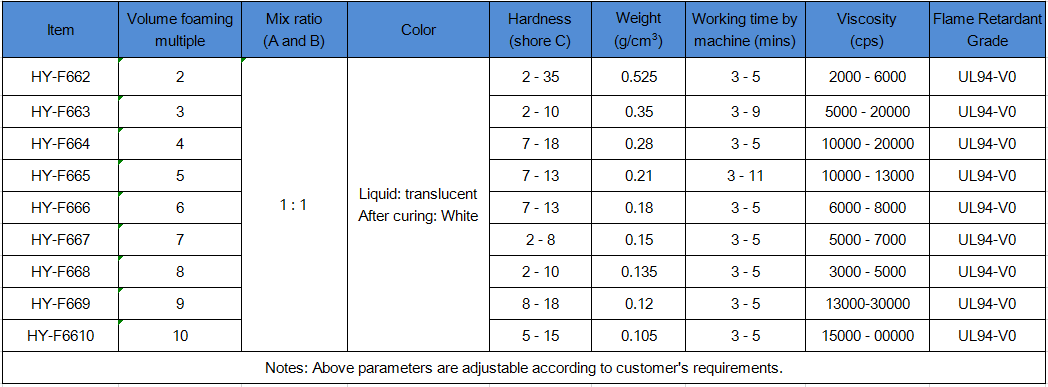
Modern liquid silicone foam grades, such as those produced by Hong Ye Silicone, deliver acoustic performance without compromise. The uniform cell structure provides predictable sound absorption and vibration isolation across broad frequency ranges. The material's excellent rebound resilience maintains damping performance through millions of compression cycles, preserving acoustic properties for the life of the product. The wide service temperature range of -65°C to 200°C allows reliable noise control in engine compartments, industrial equipment, and outdoor installations where heat and cold would destroy conventional foams. Combined with flame retardancy, moisture resistance, and chemical inertness, silicone foam offers a complete solution for demanding acoustic applications.
Application Expansion
Silicone foam has become a cornerstone of noise and vibration control across industries. In automotive and electric vehicles, it dampens motor noise, isolates vibrations, and seals cabin acoustics — a critical requirement as EVs eliminate the engine noise that once masked other sounds. In buildings, it provides acoustic sealing and vibration isolation for HVAC systems, elevators, and mechanical rooms. In home appliances, it quiets washing machines, dishwashers, and air conditioners, directly improving consumer satisfaction. In industrial equipment, it protects workers by reducing machinery noise and isolating vibration. In electronics, it damps vibrations in sensitive devices and reduces acoustic noise in premium audio equipment.
Manufacturing Advancements
Consistent acoustic performance demands precise manufacturing. Automated production lines, like those operated by Hong Ye Silicone, deliver tight control over cell structure and density — the properties that determine sound absorption and vibration damping. ISO9001-certified quality systems, laboratory testing at every stage, and final inspection before shipment ensure that every batch meets the acoustic specifications that product engineers depend on.
Future Directions
The future of acoustic materials points toward greater intelligence and integration. Multi-layer foam composites that combine sound absorption with thermal insulation, foams with tailored acoustic properties for specific frequency ranges, and lightweight grades optimized for electric vehicle acoustics represent the most promising research directions. As noise regulations tighten and consumers demand quieter, more refined products, the role of advanced silicone foam in acoustic engineering will continue to grow.

Conclusion
The pursuit of quiet is a pursuit of quality — in vehicles, buildings, appliances, and workplaces. Liquid silicone foam has proven itself an essential partner in that pursuit, delivering acoustic performance that survives the real-world conditions where noise is hardest to control. Companies like Hong Ye Silicone, with decades of formulation expertise and advanced production capability, are helping engineers around the world build products that are not only stronger and safer, but also noticeably quieter.
New Matte Anti-Fingerprint Bionic Silicone Solves Reflection and Stain Problems of Commercial Exhibition Robot Skin
Popular Liquid Silicone Rubber Factory What are the Options in 2026
Related Article