H-Class Industrial Vacuum HEPA Gel
INTRODUCTION
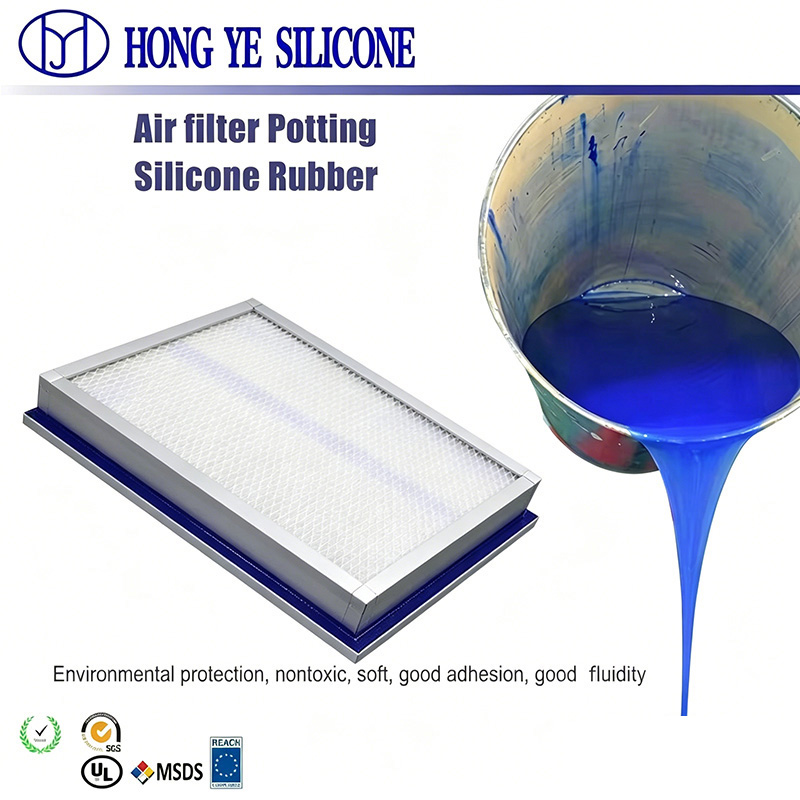
H-class industrial vacuum cleaners are required by OSHA, EU Directive 2004/37/EC, and national regulations for collecting hazardous dusts including crystalline silica, asbestos fibers, hardwood dust, and active pharmaceutical ingredients. The vacuum's H-class HEPA filter captures particles down to 0.3 microns with 99.995 percent efficiency, and the seal between the filter element and the vacuum housing must maintain this efficiency without any bypass leakage that could release carcinogenic dust back into the operator's breathing zone. In service, the filter face is subjected to high-velocity abrasive particles at 15-30 meters per second, continuous vibration from the bypass turbine motor at 50-100 Hz, and moisture from humid environments or wet pickup operations. Traditional foam or rubber gaskets erode from particle impingement and lose resilience from vibration, creating bypass gaps within 3-6 months. Addition-cure platinum silicone jelly gel fills the seal groove as a liquid, cures into a soft self-healing body that absorbs particle impact and motor vibration, and maintains zero-bypass seal throughout the filter element's service life. When the filter is replaced, the gel seals the new element automatically without separate gasket procurement.
PRODUCT REQUIREMENTS
In H-class industrial vacuum HEPA service the gel must: maintain a leak-tight seal despite strong vibration, airflow surge and intermittent motor heat with exhaust-side temperatures reaching approximately 60 to 70 degrees Celsius; resist abrasion by very fine mineral, metal and toxic dust at the filter flange without erosion or channeling; remain re-enterable for filter replacement while containing dust and avoiding exposure of maintenance personnel; adhere reliably to plastic, aluminum and steel housings; self-heal micro-cuts and show no dust penetration through the seal line; exhibit low odor and low VOC; comply with RoHS and REACH; and retain tack and penetration after aging and thermal cycling, so the vacuum continues to meet H-class filtration efficiency throughout its service life. The seal line should remain dust-tight even after the filter housing is repeatedly opened and closed, and the gel should not transfer sticky residue onto replacement filters or maintenance tools. It should perform with HEPA media designed for toxic dust without generating odors during long continuous runs, and it should retain its sealing behavior after storage in unheated vehicles or warehouses in winter and summer conditions. The material should maintain sealing when vacuums are operated at maximum airflow immediately after filter replacement and should resist compression set at the flange during long storage with the filter clamped. It should remain usable across cold warehouse storage and hot summer vehicle transport.
CORRESPONDING PRODUCT MODEL PARAMETERS
Recommended model: HY-9400 - Blue high-tack grade for H-class vacuum HEPA filter gel channels and hazardous dust containment seals requiring abrasion and vibration resistance.
|
Model |
Color |
Viscosity (mPa.s) |
Operation Time (min) |
Cure Time (hr) |
Penetration (0.1mm) |
Tack |
Mix Ratio |
Density (g/cm3) |
|
HY-9400 |
Blue |
1200+/-300 |
20-40 |
4-6 |
200+/-30 |
High |
1:1 |
0.98 |
GRADE SELECTION GUIDE
HY-9400 is blue, with a penetration of 200 (0.1 mm) and high tack. It is the typical choice for HEPA/ULPA filter gel channels, biosafety cabinet seals, and applications requiring strong adhesion and re-sealability.
HY-9405 is blue, with a penetration of 170 (0.1 mm) and medium tack. It suits electronic potting, sensor encapsulation, and applications balancing softness and dimensional stability.
HY-9409 is transparent, with a penetration of 150 (0.1 mm) and low tack. It is used for transparent gel pads, intimate apparel, prosthetic devices, and applications requiring visual clarity or easy repositioning.
FREQUENTLY ASKED QUESTIONS
Q: Can the gel really withstand silica dust impingement at 20 meters per second without eroding?
A: Cured silicone gel is a soft elastomer that absorbs particle impact energy rather than eroding like rigid materials. The gel sits in a protected seal groove, not directly exposed to the full particle stream. Laboratory abrasion tests simulating 500 hours of silica dust service show less than 0.1 mm surface wear, with seal integrity maintained throughout. Field data from construction vacuums confirms 12-month seal life in crystalline silica collection.
Q: How does a maintenance worker replace the HEPA filter in a gel-sealed industrial vacuum?
A: Open the filter housing latch, lift out the spent filter element, and dispose of it per hazardous waste protocol. The gel channel self-heals. Insert the new H-class HEPA element and press down firmly. The gel wraps around the element frame edge and re-seals within minutes. No separate gasket needed, no tools required. The blue gel color makes it easy to inspect seal completeness before returning the vacuum to service.
Q: For vacuum OEMs, what is the cost impact of switching from rubber gaskets to gel seal?
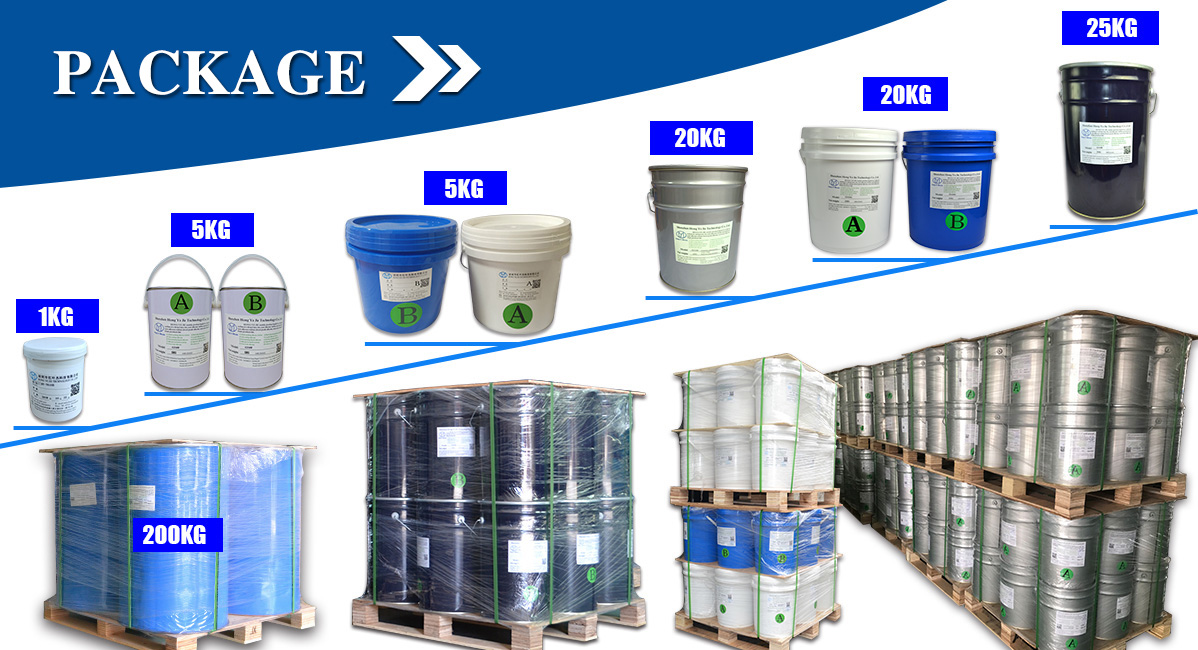
A: Per-unit gel fill cost is comparable to a precision rubber gasket. However, OEMs eliminate gasket inventory management (multiple SKUs for different vacuum models), reduce assembly time by removing the gasket positioning step, and achieve consistently lower bypass rates in H-class certification testing. Over the product warranty period, warranty claims for filter seal failures drop by 70-80 percent. Product is available in 5 kg kits for small OEM runs and 20 kg pails for volume production.
QUALITY ASSURANCE & CERTIFICATION
Every batch of Hong Ye HY-94 series jelly gel is produced under ISO 9001 certified quality management in a dedicated silicone workshop, with incoming raw-material inspection, in-process mixing control and finished-product testing on every batch. Before release each lot is checked for viscosity, mix ratio, cure time, penetration, color and tack, and a Certificate of Analysis (COA) listing the actual measured values ships with every order. Standard grades carry RoHS 2.0 and REACH SVHC test reports; skin-contact and baby-care grades can be supplied with FDA 21 CFR 177.2600 and LFGB Section 30/31 reports and, on request, ISO 10993 biocompatibility testing; flame-retardant grades meet UL94 V-0. Food-contact, medical and export orders are supported by the corresponding compliance files for customer qualification. Hong Ye has manufactured and supplied jelly gel to contractors, filter builders and equipment makers in over 60 countries since 2005, with monthly capacity above 500 tons, batch traceability and multi-language documentation. Application engineers provide grade selection, sample evaluation, on-site or video pouring guidance and after-sales follow-up, and technical data sheets (TDS), safety data sheets (SDS) and test reports are available before order to support tender and audit processes.
CONCLUSION
The market for tank sealant jelly gel in this application area continues to expand as cleanroom construction, electronic encapsulation, automotive electrification, energy storage and consumer product manufacturing drive demand for reliable two-component addition-cure silicones. Hong Ye supports this growth with ISO 9001 certified production, 500-plus ton monthly capacity, complete compliance documentation and responsive application engineering. Buyers evaluating suppliers are advised to look beyond unit price and compare batch-to-batch consistency, documentation completeness, delivery stability and technical service responsiveness, because the cost of a sealing or potting failure - rework, downtime, certification delay or product recall - far exceeds the incremental cost of a quality gel. Choosing the correct grade for the channel, operating temperature and service environment, following the 1:1 mixing and pouring procedure and validating with a small trial batch all help secure a durable seal. Hong Ye welcomes sample requests and application enquiries; our engineers will recommend the HY-9400, HY-9405 or HY-9409 grade that matches the sealing or potting requirement and support qualification from first sample through volume production.
CONTACT US
SHENZHEN HONG YE JIE TECHNOLOGY CO., LTD — Silicone Rubber Manufacturer, 23 Years
Contact: Kimi (Sales)
Mobile / WhatsApp / WeChat: 0086-18938867594
Email: hyjd@szrl.net
Website: www.szrl.net
Address: Building A, No.3, Hongling First Road, Liulian Shibi, Pingdi Street, Longgang District, Shenzhen, China
Which Pad Silicone to Choose Hongye Silicone
Realistic Sculpture Orders Grow, Portrait Mold Silicone Improves Detail Replication
Related Article