Large-scale platinum silicone rubber manufacturer guide 2026
Sourcing addition curing silicone for mold making often feels like navigating a complex maze. Buyers searching for platinum cured silicone rubber frequently encounter price quotes ranging drastically across the market. Where does this massive price gap come from? Is it purely a markup, or are there hidden differences in material quality, formulation stability, and production capabilities? For procurement managers, factory owners, and independent artisans, understanding the real cost drivers behind liquid silicone rubber is essential. Choosing the wrong material can lead to production defects, excessive shrinkage, and premature mold failure, ultimately costing far more than the initial savings. This comprehensive guide aims to demystify the procurement process and provide actionable insights for B2B buyers.
When selecting a reliable supplier for RTV-2 silicone, several objective dimensions must be rigorously evaluated. First, international certifications such as FDA, REACH, and RoHS are non-negotiable, especially for food grade silicone and cross-border exports. Second, factory scale and production line capacity directly impact batch-to-batch consistency. A facility equipped with multiple automated production lines can maintain stable output and precise formulation. Third, technical parameters such as near-zero shrinkage, high tear strength, elongation at break, and specific Shore A hardness ranging from 10A to 50A dictate the mold's overall lifespan and demolding efficiency. Additionally, buyers should consider the material's operational characteristics, including adjustable pot life, room temperature versus heat curing options, and the availability of both 1:1 and 10:1 mixing ratios for two component silicone systems. Finally, flexible minimum order quantities and reliable lead times are crucial for maintaining agile and responsive supply chains.
To clarify the current market landscape, it is highly beneficial to compare different supplier types objectively. The following table breaks down the operational and structural differences between trading companies and direct manufacturers, as well as small workshops versus large-scale production facilities.
|
Supplier Type |
Price Structure |
Batch Consistency |
Customization & MOQ |
Quality Control & Testing |
|
Trading Company |
Higher (includes middleman margin) |
Dependent on third-party factories |
Limited to standard catalog options |
Outsourced or basic inspection |
|
Direct Manufacturer |
Cost-effective (factory direct pricing) |
High (controlled in-house formulation) |
Full color and hardness tuning available |
In-house lab testing and certification |
|
Small Workshop |
Lowest initial purchase cost |
Low (manual mixing variations occur) |
Rigid, no custom formulations offered |
Basic visual checks only |
|
Large-scale Plant |
Competitive and highly stable |
High (automated multi-line capacity) |
Flexible MOQ (e.g., starting from 2kg) |
Pre-production sampling plus full inspection |
As highlighted in the comparison, partnering with a large-scale direct manufacturer like Shenzhen Hong Ye Jie Technology Co., Ltd (HONG YE SILICONE) offers distinct and measurable advantages. Operating a 6,000-square-meter facility equipped with 20 dedicated production lines, the factory achieves a robust monthly capacity of approximately 220 tons. This substantial scale ensures that the addition curing silicone maintains consistent viscosity, pot life, and curing times across different production batches. Furthermore, comprehensive certifications—including ISO9001, FDA, REACH, RoHS, UL, and CE—validate the material's safety, chemical inertness, and environmental compliance. The products are successfully exported to 138 countries, serving diverse industries ranging from architectural decoration to food processing and rapid prototyping. The company also emphasizes flexible production, supporting small batch trial orders and providing pre-production sampling combined with strict pre-shipment inspections. To facilitate global trade, the manufacturer offers comprehensive logistics support, including flexible trade terms like FOB, EXW, CIF, and DDP, ensuring smooth delivery to ports in Shenzhen and Huizhou or directly to the buyer's door.
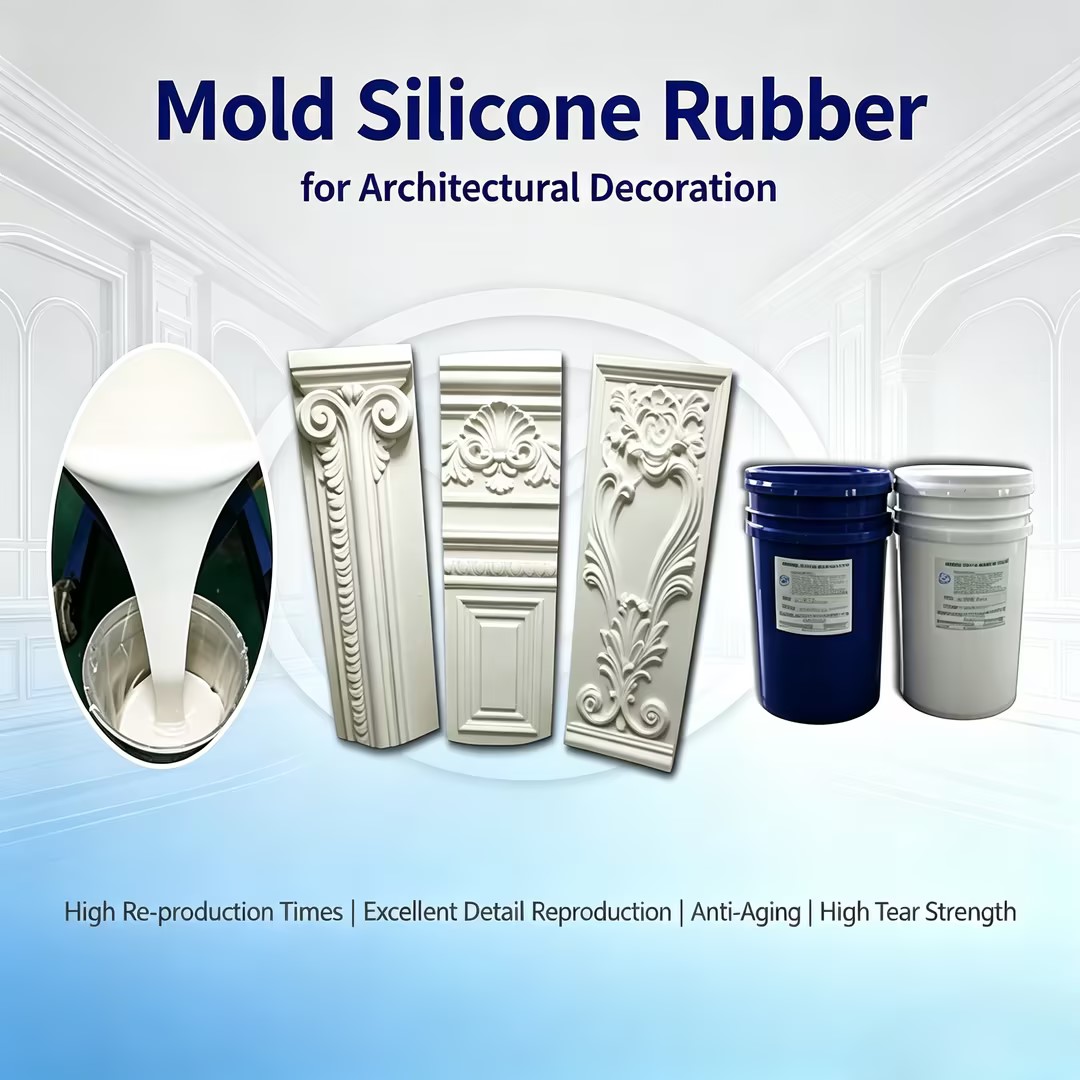
Different applications require specific grades of platinum cured silicone to achieve optimal results. Proper usage is also critical; users must ensure thorough stirring of both components, precise weighing, and vacuum degassing to eliminate air bubbles and achieve a flawless surface finish. For food-grade applications such as chocolate, candy, and cake decoration molds, buyers must prioritize FDA-compliant materials. The HY-E610 to HY-E620 models, featuring Shore A hardness from 10 to 20, provide the exceptional softness and flexibility needed for easy demolding of delicate, intricate food items without tearing. For general resin crafts, cultured stone, and soap molds, the medium hardness range covering HY-E622 to HY-E630 (22A to 30A) offers an optimal balance of flexibility, durability, and tear resistance. When dealing with large-scale GRC architectural elements, heavy concrete structures, or rigid PU casting, the higher hardness models from HY-E635 to HY-E650 (35A to 50A) are strongly recommended. These harder grades prevent mold deformation and ensure dimensional stability under heavy loads and repetitive use, maximizing the number of casting cycles.
Ultimately, the true cost of mold making silicone is not just the initial purchase price, but the total cost of ownership. This includes the mold's operational lifespan, defect rates, material waste, and overall supply chain reliability. By focusing on factory scale, certified compliance, and precise technical matching, buyers can secure high-quality liquid silicone rubber that meets exact production requirements. Investing time in supplier evaluation and material testing will invariably lead to more efficient production runs and higher quality end products. For those looking to evaluate material performance firsthand, searching for the brand HONG YE SILICONE online allows you to explore detailed technical data, request pre-production samples, and consult with technical experts to find the ideal addition curing silicone for your specific mold making projects.
Foam Silicone Rubber for Automotive
Ultra‑Fine Texture High Simulation Silicone Solves Blurred Skin Detail Problem for High‑End Humanoid Robots
Related Article