


High Tack Self-Healing Grade Two Component Tank Sealant Jelly Gel
Product Overview:
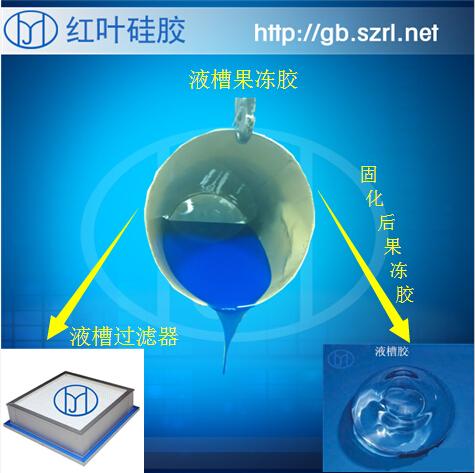
Hong Ye HY-9400 is a premium two-component addition-cure platinum catalyzed blue jelly gel specifically engineered for high-performance liquid tank sealing in cleanroom and air filtration systems. With a buttery soft consistency measured at a penetration of 200 plus or minus 30 (0.1mm) and a permanently high-tack surface, HY-9400 delivers reliable zero-leakage sealing that outlasts conventional gaskets, foams and caulks by a wide margin. The product is mixed 1:1 by weight, self-levels after pouring, cures at room temperature within 4 to 6 hours, and requires no vacuum degassing, making it one of the easiest high-performance sealants to deploy on construction sites and in production lines worldwide. As a high tack self-healing grade, this variant forms a permanently tacky surface that reseals itself after filter replacement. It is specifically formulated for ultra-low humidity dry rooms used in lithium battery cell manufacturing, where decades of field experience have shown that the seal must remain soft, tacky and compliant through thousands of hours of thermal cycling, vibration and maintenance operations. Backed by Hong Ye's nearly 20 years of silicone manufacturing expertise and supplied to customers in over 60 countries, HY-9400 combines the performance of premium imported gels with the cost efficiency, short lead time and responsive technical support of a Chinese manufacturer. Whether you are sealing a single biosafety cabinet or outfitting a 100,000-square-meter semiconductor fab, HY-9400 delivers consistent batch-to-batch quality, comprehensive documentation and application engineering support from first sample through full production ramp.
Key Features:
• Low exothermic peak during cure, safe for heat-sensitive electronic components and thin films
• No corrosive by-products, fully compatible with aluminum, stainless steel, ABS, PC and PP
• Technical support including on-site pouring guidance and custom formulation development
• No VOC emissions during or after cure, suitable for enclosed cleanroom and medical environments
• Excellent electrical insulation with dielectric strength above 20 kV/mm
• Soft jelly-like consistency with buttery skin feel, comparable to premium German Wacker gel
• Available in sample kits from 1kg for qualification before volume orders
• Low oil-bleed refined formulation prevents contamination of filters, fabrics and skin
• Customizable blue or transparent color, penetration from 120 to 260 (0.1mm), and tack level
• 1:1 mix ratio by weight, easy to meter with manual or automated dispensing equipment
• Recommended model: HY-9400 - Blue high tack tank sealant jelly gel
Technical Parameters:
Model | Color | Viscosity (mPa.s) | Operation Time (min) | Cure Time (hr) | Penetration (0.1mm) | Tack | Mix Ratio | Density (g/cm3) |
HY-9400 | Blue | 1200+/-300 | 20-40 | 4-6 | 200+/-30 | High | 1:1 | 0.98 |
HY-9405 | Blue | 1800+/-400 | 20-40 | 4-6 | 170+/-30 | Medium | 1:1 | 1.02 |
HY-9409 | Transparent | 2200+/-400 | 20-40 | 4-6 | 150+/-30 | Low | 1:1 | 0.96 |
Detailed Application Scenarios:
Biological safety cabinet and pharmaceutical GMP cleanroom users value HY-9400 for its zero-VOC, low-odor and particle-free characteristics. Because the gel cures into a non-dusting, non-fiber-releasing mass, it does not introduce contamination into controlled environments. It also withstands repeated wipe-downs with isopropyl alcohol, hydrogen peroxide and quaternary ammonium disinfectants without swelling, cracking or losing tack. Field data from hospital pharmacy IV admixture rooms and vaccine filling lines show gel channels poured with HY-9400 remain leak-free through more than five years of quarterly filter changes and annual certification testing.
Data center and hyperscale facility operators appreciate that HY-9400 is essentially maintenance-free after installation. Unlike foam gaskets that harden and take a permanent compression set after a few cooling-heating cycles, HY-9400 stays soft and resilient for a decade or more. When hot-aisle containment panels or fan filter units need service, the gel reseals itself without requiring replacement material, reducing both material cost and the risk of human error during critical facility maintenance windows. The blue color also makes inspection easy: technicians can visually confirm the gel channel is fully filled before commissioning.
Application & Operating Instructions:
Step 1 Surface preparation: Clean the gel channel with a dry lint-free cloth. Remove all oil, water, rust, latex residue and old cured silicone fragments. For new filter housings, wipe with isopropyl alcohol and allow to fully dry.
Step 2 Component B preparation: Before each use, stir component B thoroughly for at least 2 minutes. The blue pigment and catalyst can settle during storage; incomplete stirring causes color variation and soft or uncured spots.
Step 3 Weighing and mixing: Weigh A and B at exactly 1:1 by weight using a calibrated scale. Pour into a clean mixing container and stir slowly for 3 to 5 minutes, scraping the sides and bottom regularly. Avoid fast stirring which introduces bubbles.
Step 4 Pouring: Pour the mixed gel slowly along one end of the channel and allow it to self-level to a depth of 15 to 25mm. Do not pour from a height to avoid air entrapment. For long channels, pour in sections.
Step 5 Curing: Allow 4 to 6 hours at 25C before installing the HEPA filter. Full physical properties develop after 24 hours. No vacuum degassing is required.
Step 6 Contamination prevention: Use polyethylene, nylon or nitrile gloves. Never use natural rubber latex gloves. Avoid contact with sulfur-containing materials, amines, phosphorus compounds, tin-cured silicone and PVC, as these can inhibit the platinum catalyst and prevent cure.
Model Selection Guide:
The HY-94 series offers three standard grades to cover the full range of jelly gel applications, and custom formulations are available for volume orders:
HY-9400 (Blue, High Tack, Penetration 200): The softest and most aggressive grade, designed for HEPA/ULPA filter gel seals in cleanrooms, biosafety cabinets, pharmaceutical GMP facilities, hospital operating rooms, semiconductor fabs, lithium battery dry rooms and data centers. Choose this model when maximum self-healing and conformability to knife-edge channels are the high priority.
HY-9405 (Blue, Medium Tack, Penetration 170): The balanced all-rounder for instrument meter sealing, electronic encapsulation and outdoor waterproofing. Typical applications include smart water/gas/electric meters, automotive ECUs and sensors, solar PV junction boxes, LED modules, underwater lights and pressure sensors. Choose this model when you need a combination of flowability, structural support, vibration damping and repairability.
HY-9409 (Transparent, Low Tack, Penetration 150): The premium skin-contact grade for intimate apparel and medical products. Typical applications include silicone bra pads, push-up inserts, breast prostheses, nipple covers, bridal and swimwear gel pads, orthopedic insoles and surgical positioning pads. Choose this model when clarity, dry skin feel, anti-yellowing and body-safe materials are required.
If your project requires a different penetration, color, cure speed or special certification (FDA, LFGB, UL94), contact Hong Ye technical support for a custom formulation. Custom MOQ starts from 20kg and typical lead time is 7 to 10 working days.
Recommended Application: Lithium Battery Dry Room Gel Seal
Quality & Compliance:
Every batch of Hong Ye HY-94 series jelly gel is manufactured under ISO 9001 certified quality management and tested for viscosity, mix ratio, cure time, penetration, color and tack before release. A Certificate of Analysis (COA) is provided with every shipment. Standard grades are tested to RoHS 2.0 and REACH SVHC requirements. HY-9409 uses food-contact grade raw materials and can be supplied with FDA 21 CFR 177.2600 and LFGB Section 30/31 test reports on request. All products carry a 12 month shelf life from manufacture date when stored sealed below 25C. Hong Ye has supplied jelly gel to cleanroom contractors, meter manufacturers, intimate apparel brands and medical device OEMs in over 60 countries since 2005.
Packaging:
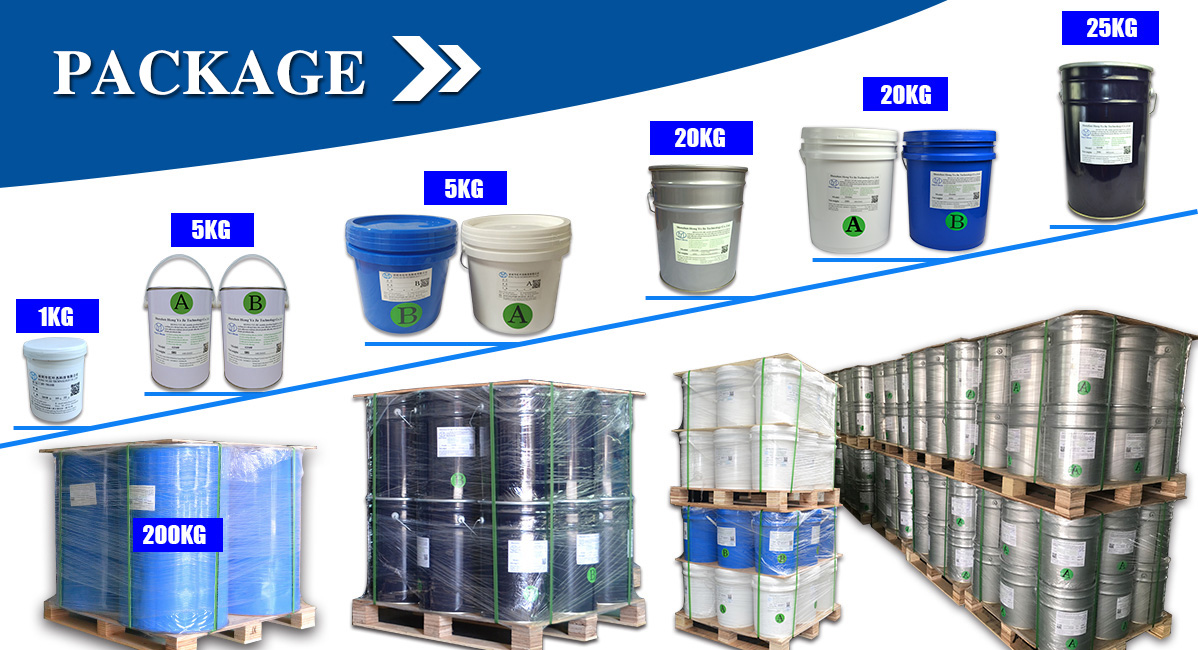
Standard packaging options include 1kg trial kits (500g A + 500g B), 5kg kits, 20kg pails, 25kg pails and 200kg drums. Components A and B are supplied in separate containers within each kit. Custom packaging and private labeling are available for orders above 200kg. All kits are clearly labeled with batch number, manufacture date, expiry date and safety information.
Competitive Advantages:
Hong Ye HY-9400 stands out in the global jelly gel market through a combination of formulation expertise, vertical integration and customer-focused service. Our in-house silicone polymer synthesis and compounding lines give us full control over raw material quality and batch consistency, while our 20,000-square-meter Shenzhen factory supports monthly output of over 500 tons of addition-cure silicone. This scale allows us to offer prices typically 30 to 50 percent lower than imported German Wacker and American Magna-Dyne gels without compromising on performance. We maintain local stocks of standard grades for 3 to 5 working day delivery, and our technical sales engineers are available for on-site pouring trials, gel channel design reviews and custom formulation projects. For OEM customers we provide private labeling, neutral packaging, COA documents in multiple languages and dedicated batch traceability, making it straightforward to integrate our gel into your supply chain whether you consume 20kg per month or 20 tons per quarter.
Ordering and Logistics:
To order HY-9400, contact Hong Ye sales with your required model, quantity, destination country and preferred courier. We accept T/T bank transfer, PayPal for sample orders, and Alibaba Trade Assurance for online orders. Standard packaging ships from stock within 3 to 5 working days after payment. We ship worldwide via DHL, FedEx, UPS and sea freight for bulk orders. Dangerous goods classification is not required for addition-cure silicone gel under most transport regulations, simplifying international shipping. All shipments include commercial invoice, packing list, COA and safety data sheet.
Technical Support and Customization:
Hong Ye operates a dedicated technical service team staffed by silicone chemists and application engineers with an average of more than 10 years of industry experience. We support customers throughout the entire product lifecycle: initial grade selection based on your drawings and service conditions, on-site or remote pouring trials, gel channel and mold design review, cure profile optimization, failure analysis and ongoing quality improvement. For customers with special requirements, our R&D center can develop custom formulations with adjusted penetration (120 to 260 in 0.1mm units), custom Pantone colors, accelerated or delayed cure profiles, flame retardant grades meeting UL94 V-0, thermal conductive grades, food-contact FDA and LFGB certified grades, and medical grade formulations with biocompatibility testing. Custom development typically takes 7 to 14 working days from confirmed requirements to shipped samples, and the custom formula becomes your exclusive formulation for ongoing orders. We also provide gel consumption calculation, cost-per-seal analysis and comparison testing against your current sealant to help you make data-driven sourcing decisions.
Precautions:
Use polyethylene, nylon or nitrile gloves; never use natural rubber latex gloves. Avoid contact with sulfur-containing materials, amines, phosphorus compounds, tin-cured silicone and PVC, as these inhibit the platinum catalyst and prevent cure. Mix A and B at exactly 1:1 ratio by weight using a calibrated scale. Stir thoroughly for 3-5 minutes, scraping container walls and bottom. Do not exceed 100°C during heat curing. Ensure good ventilation during operation.
Storage:
Store sealed containers in a dry, ventilated area below 25°C, away from direct sunlight, sulfur-containing materials, amines, food and strong chemicals. Shelf life is 12 months from manufacture date. Reseal unused material immediately after dispensing. Refrigerated storage at 5-15°C can extend shelf life; allow material to return to room temperature before opening to prevent condensation.
FAQ:
Q: Will the gel self-heal after a HEPA filter is removed and reinserted?
A: Yes. The cured gel remains permanently tacky and soft. When the knife edge is lifted, the gel temporarily separates; when reinserted, it flows back around the blade within minutes, restoring the airtight seal. This self-healing property is one of the key advantages over compressed gaskets and is especially valuable during periodic filter replacement in cleanrooms and biosafety cabinets.
Q: What causes incomplete cure or sticky spots and how can I prevent it?
A: Incomplete cure is almost always caused by contamination or off-ratio mixing. The most common contaminants are sulfur (found in natural latex gloves and some rubbers), nitrogen compounds (amines), phosphorus, tin-cured silicone and certain PVC products. These inhibit the platinum catalyst. Prevention: use nitrile or PE gloves, dedicated clean tools, accurate 1:1 weighing, and stir component B thoroughly before mixing.
Q: What is the shelf life and how should the gel be stored?
A: Sealed containers have a 12 month shelf life when stored below 25C in a dry, ventilated area away from direct sunlight. Reseal unused material immediately after dispensing. Keep components A and B separate. Do not store near sulfur-containing materials, amines, food or strong chemicals. Refrigerated storage at 5 to 15C can extend shelf life, but allow the material to return to room temperature before opening to avoid condensation.
Q: How long does the gel take to cure and can I speed it up?
A: At 25C the gel reaches touch-dry in 4 to 6 hours and full properties after 24 hours. For mass production, heat-curing at 60 to 80C reduces demolding time to 30 to 60 minutes. Do not exceed 100C as it may cause discoloration or surface defects. Low temperatures below 15C will significantly slow the cure.
Q: Can old gel in a filter tank or housing be topped up?
A: Yes. If the existing gel is still clean, soft and tacky, simply wipe the surface with a dry cloth and pour fresh gel on high. The fresh addition-cure gel bonds chemically to the clean cured gel. If the old gel has hardened, dried out, turned yellow or become contaminated, remove it completely, clean the channel, and refill.