Trusted Addition Curing Silicone Rubber Source Factory Review 2026

A buyer opens a trading platform and searches for addition curing silicone rubber. Dozens of listings use the same phrases: source factory, direct price, FDA approved. A few messages later, the claims blur together, and it becomes nearly impossible to tell which suppliers actually manufacture anything. This 2026 source factory review explains how experienced buyers identify a trusted addition curing silicone rubber manufacturer and what evidence to request before placing a volume order.
## What "Source Factory" Should Actually Mean
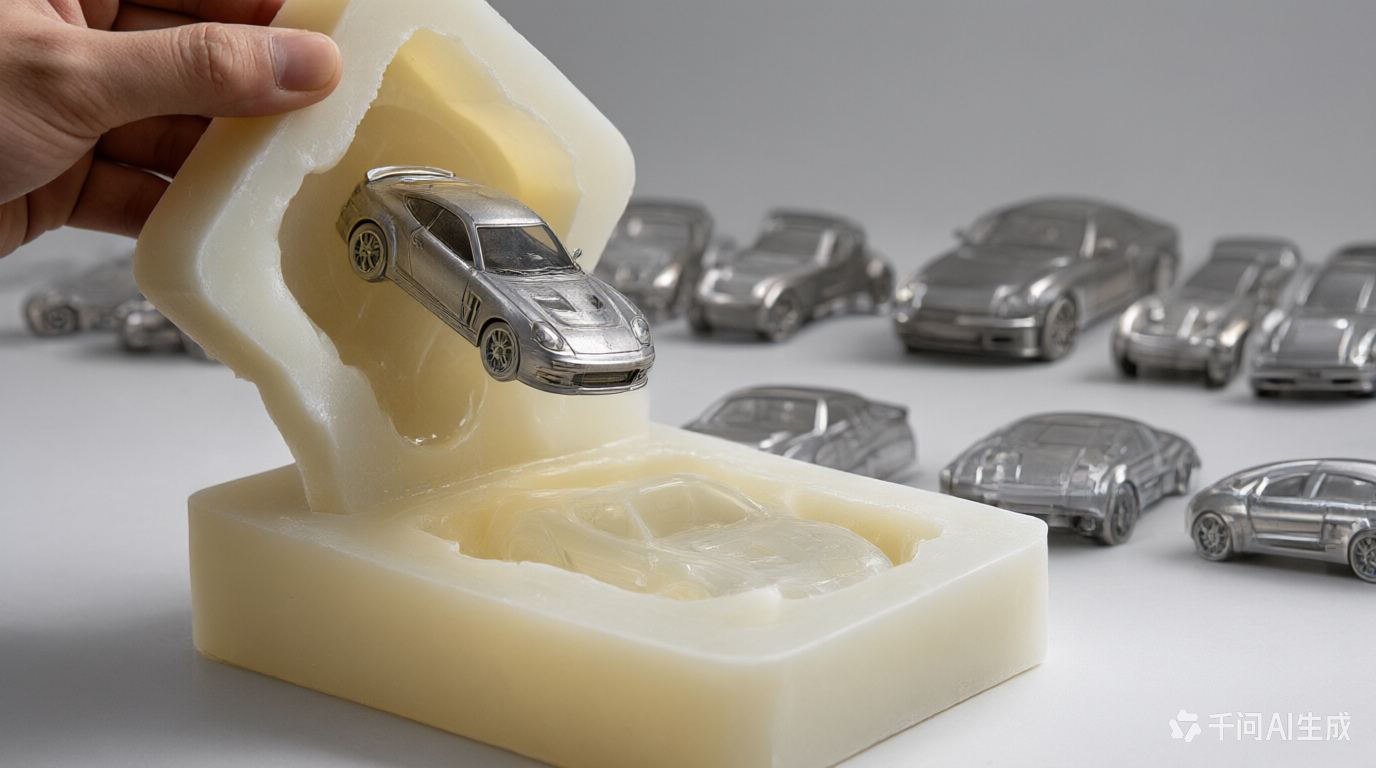
In the silicone industry, a source factory controls formulation, production lines, and quality inspection in its own facility. A trading company can rent a workshop for photos, and a small workshop can call itself a factory, so labels alone prove little. Buyers should verify four operational facts:
Production infrastructure: line count, facility area, and monthly throughput. A manufacturer operating about 20 production lines across roughly 6000 square meters, with approximately 220 tons of monthly capacity, has the equipment base needed for stable batch-to-batch supply.
Quality process: incoming material checks, in-process viscosity and hardness monitoring, and pre-shipment full inspection. Ask where each step happens and request records.
Technical documentation: TDS, SDS, and COA for each shipment, plus checkable certificates such as ISO9001 CN11/31147, FDA TS26030035, RoHS TS21121372, and REACH TS21121373.
Direct communication: technical staff who can answer questions about hardness, ratio, pot life, and curing instead of salespeople relaying messages to an unnamed producer.
## Why Addition Curing Silicone Deserves Closer Scrutiny
Addition curing silicone, also called platinum cure silicone, vulcanizes through a platinum catalyst. Compared with tin-cured systems, it is known for near-zero shrinkage, low odor, food-contact suitability, and strong high-temperature performance up to around 200C. Those advantages only materialize when production is controlled.
Contamination is a classic risk: platinum cure formulations can be inhibited by substances such as certain sulfur-containing clays, unsaturated woods, and improperly cleaned equipment. A disciplined factory handles this through clean containers, documented procedures, and cure testing. A workshop that repackages material without controls may deliver batches that fail to cure properly, which is why factory discipline matters as much as the datasheet.
## Supplier Type Comparison
| Dimension | Trading Company | Small Workshop | Source Factory |
|-----------|----------------|----------------|----------------|
| Price basis | Factory price plus markup | Low quote, unstable cost | Direct mid-range pricing |
| Batch consistency | Depends on upstream source | Noticeable drift | Controlled, documented runs |
| Hardness range | Few stock grades | Limited selection | Full 10A-50A HY-E range |
| Certificate control | Passed along | Often incomplete | Own certificates, verifiable |
| Customization | Slow relay | Informal, unvalidated | Structured sampling process |
| MOQ and trials | Often rigid | Low but unpredictable | 2kg trial orders supported |
| Export capability | Moderate | Limited | Own license, 138 countries served |
| Problem solving | Multiple intermediaries | Ad hoc responses | Direct factory support |
The economics are straightforward: a verified source factory usually quotes only modestly above the lowest informal offer, while removing the costs of failed molds, delayed shipments, and rejected export paperwork.
## Hardness Selection by Application
Food-contact molds: 10A to 20A soft grades suit chocolate, candy, fondant, and cake decoration. Require FDA documentation, test for residual odor after curing, and confirm the certificate number independently.
GRC and concrete elements: 35A to 50A firm grades support heavy architectural panels. Prioritize near-zero shrinkage, alkali resistance data, and a supplier accustomed to construction-material export standards.
Candles and soap: 15A to 25A balances fine detail and demolding durability, with color matching available when branded molds require it.
Resin and epoxy crafts: 25A to 30A offers broad compatibility and chemical resistance against casting resins, making it the most versatile middle range.
## A Practical Buyer Checklist
Start with documentation. Request the TDS and all certificate numbers before discussing price discounts, and verify each number through the relevant issuing body.
Order a 2kg sample. Run it through your actual master model and casting material. Record mixing behavior, pot life, cure time, hardness on a durometer if available, surface finish, odor, and demolding cycles.
Review the operation. Ask for a live or recorded factory walkthrough showing production lines, raw material labeling, and inspection stations. Cross-check the stated 20 lines and 6000 square meter facility against what you see.
Place a controlled trial order of 20-50kg. Inspect packaging (1kg, 5kg, 20kg, 25kg, or 200kg options), labeling, hardness, and paperwork on arrival before scaling to monthly volumes.
Clarify commercial terms. Confirm FOB, EXW, CIF, CFR, DDP, or DDU options, payment methods such as L/C and T/T, nearest ports such as Shenzhen and Huizhou, and support for single-item dropshipping if needed.
## Conclusion for 2026 Sourcing
A trusted addition curing silicone rubber source factory is recognizable by evidence rather than advertising: verifiable certificates, measurable production scale, a complete hardness spectrum, disciplined cure control, and export documentation refined over years of worldwide shipping. Buyers conducting this year's supplier review can search for HONG YE SILICONE to examine the HY-E addition curing series, request full documentation and samples, and run the checklist above before committing to long-term orders.
Liquid Silicone Foam Expanding to 7× Its Volume
New Ultra‑Soft Low Modulus Bionic Silicone Solves Stiff Micro‑Expression Problem of High‑End Humanoid Robots
Related Article