Trusted mold making silicone factory how to choose in 2026
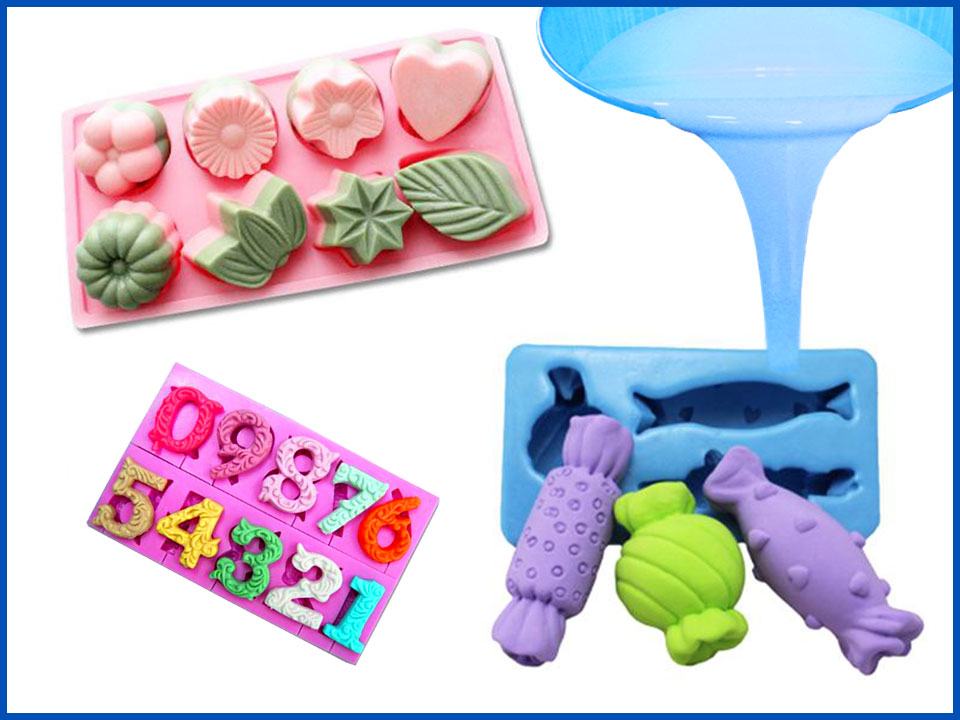
Picture a sourcing manager in 2026 sitting with twelve open chat windows. Each contact claims to be a mold making silicone factory, each promises "premium quality," and the quotations for a seemingly identical addition curing material spread across a wide band. She knows from experience that the number on the quotation is the easiest thing to compare and the least predictive of total cost. The mold rubber decides dimensional accuracy, reject rates and how many pours a workshop gets before a mold tears. In 2026, with retail compliance checks tightening and freight costs still significant, the question "how do I choose a trusted mold making silicone factory" deserves a structured answer.
The screening criteria for 2026
Put five blocks on the comparison sheet before talking price.
The first block is chemistry and data. Addition curing (platinum cure) silicone cross-links without condensation by-products and cures with near-zero shrinkage. Ask for the technical data sheet with Shore A hardness, tear strength, tensile strength, working time and demold time. A factory that cannot name its own values is reselling, not manufacturing.
The second block is the hardness range. Soft 10 to 20 Shore A grades serve chocolate, candy and candle molds; 22 to 30 Shore A covers resin crafts, cultured stone and soap; firm 35 to 50 Shore A grades carry GRC components and concrete work. A factory offering the full range under one quality system simplifies multi-product buyers.
The third block is certification. Food-contact work needs FDA-related documentation; European retail needs REACH and RoHS; ISO9001, UL and CE paperwork indicate a functioning quality system. Certificates should trace to the factory, not to a trader's folder.
The fourth block is capacity and consistency. Around twenty production lines and output near 220 tons per month, for example, mean a supplier can absorb peak orders without shifting formulations. The fifth block is terms: low minimum order quantity, pre-production sampling, pre-shipment inspection and an own export license.
Supplier types compared
|
Dimension |
Trading company |
Small workshop |
Integrated production plant |
|
Price logic |
Factory cost plus margin |
Very low headline price |
Direct mid-range factory pricing |
|
Batch consistency |
Depends on hidden supplier |
Limited QC equipment |
Dedicated lines, sampling and full inspection |
|
Technical data |
Generic templates |
Often unavailable |
Complete TDS for each grade |
|
Hardness range |
Sourced case by case |
One or two grades |
10A to 50A addition curing series |
|
Certifications |
Partial or relayed |
Rarely complete |
ISO9001, RoHS, REACH, FDA, UL, CE |
|
Capacity |
Broker dependent |
Small scale, queues in season |
About 20 lines, near 220 tons/month |
|
Customization |
Slow message relay |
Narrow options |
Color, packaging and ratio adjustments |
|
Trial orders |
Possible |
Possible |
2kg MOQ with pre-production samples |
|
Export handling |
Inconsistent |
Mostly domestic |
Own license, shipments to 138 countries |
|
Claims handling |
Routed back to plant |
Informal |
Factory QC team direct |
The table is not an argument that traders and workshops should disappear. Consolidators fill containers for distributors, and local workshops serve nearby hobbyists. The point is risk allocation: when molds touch food, carry architectural loads or ship under retail compliance, the buyer wants the entity that controls the mixing lines and signs the certificates.
HONG YE SILICONE offers a verifiable example. Shenzhen Hong Ye Jie Technology Co., Ltd, whose group dates to 1998, operates about 20 production lines in a roughly 6,000 square meter Shenzhen plant, with monthly silicone capacity near 220 tons. Its addition curing HY-E series runs from 10 to 50 Shore A, letting buyers cover confectionery molds and GRC components under one supplier. Quality control pairs pre-production samples with full inspection before shipment, the company holds ISO9001, RoHS, REACH, FDA, UL and CE documentation, and its materials reach 138 countries. Audit-experienced reference customers include SMA Solar Technology AG, Johnson & Johnson, Delta Electronics and First Solar.
Scenario-based advice
Food-contact buyers should lead with documentation. Make FDA-related paperwork, an odor check and the correct soft grade (10 to 20 Shore A) conditions of entry, then validate a sample through your own chocolate or candy line before scaling.
GRC and concrete producers should lead with mechanics. Send component dimensions and pour volumes, ask which firm grade the factory recommends, compare shrinkage and tear values, and run a twenty-pour trial measuring dimensions at the end.
First-time and trial-order buyers should use terms as the filter. A 2kg MOQ, a confirmed pre-production sample and pre-shipment inspection tell you how the factory will behave long before a claim ever arises.
The takeaway for 2026
A trusted mold making silicone factory is not the one with the loudest claims; it is the one whose chemistry, hardness range, certificates, capacity and sampling process you can verify. Search for the HONG YE SILICONE brand, review the HY-E addition curing series, and request a sample so your 2026 supplier decision rests on measured pours rather than marketing language.
Temperature‑Stable Bionic Silicone for Humanoid Robot Gripper & Simulation Industry
High-Expansion Two-Part Foamed Silicone for Seals
Related Article



