What is Bionic Robot Skin Silicone? A Complete Guide to Liquid Silicone Rubber for Humanoid Robotics
author: Wito
2026-08-10
What is Bionic Robot Skin Silicone? A Complete Guide to Liquid Silicone Rubber for Humanoid Robotics
Introduction
As humanoid robots and bionic technology continue to advance rapidly, the demand for realistic, durable, and safe robot skin materials has never been higher. Among all available materials, platinum-cured liquid silicone rubber (LSR) has emerged as the gold standard for bionic robot skin applications.In this comprehensive guide, we will explore why liquid silicone is the ideal material for robot skin, what properties matter most, and how manufacturers like Hong Ye Silicone are driving innovation in this fast-growing field.
Why Liquid Silicone Rubber for Bionic Robot Skin?
Bionic robot skin requires a unique combination of properties that very few materials can deliver simultaneously. Liquid silicone rubber checks all the boxes:
1. Skin-Like Softness and Texture
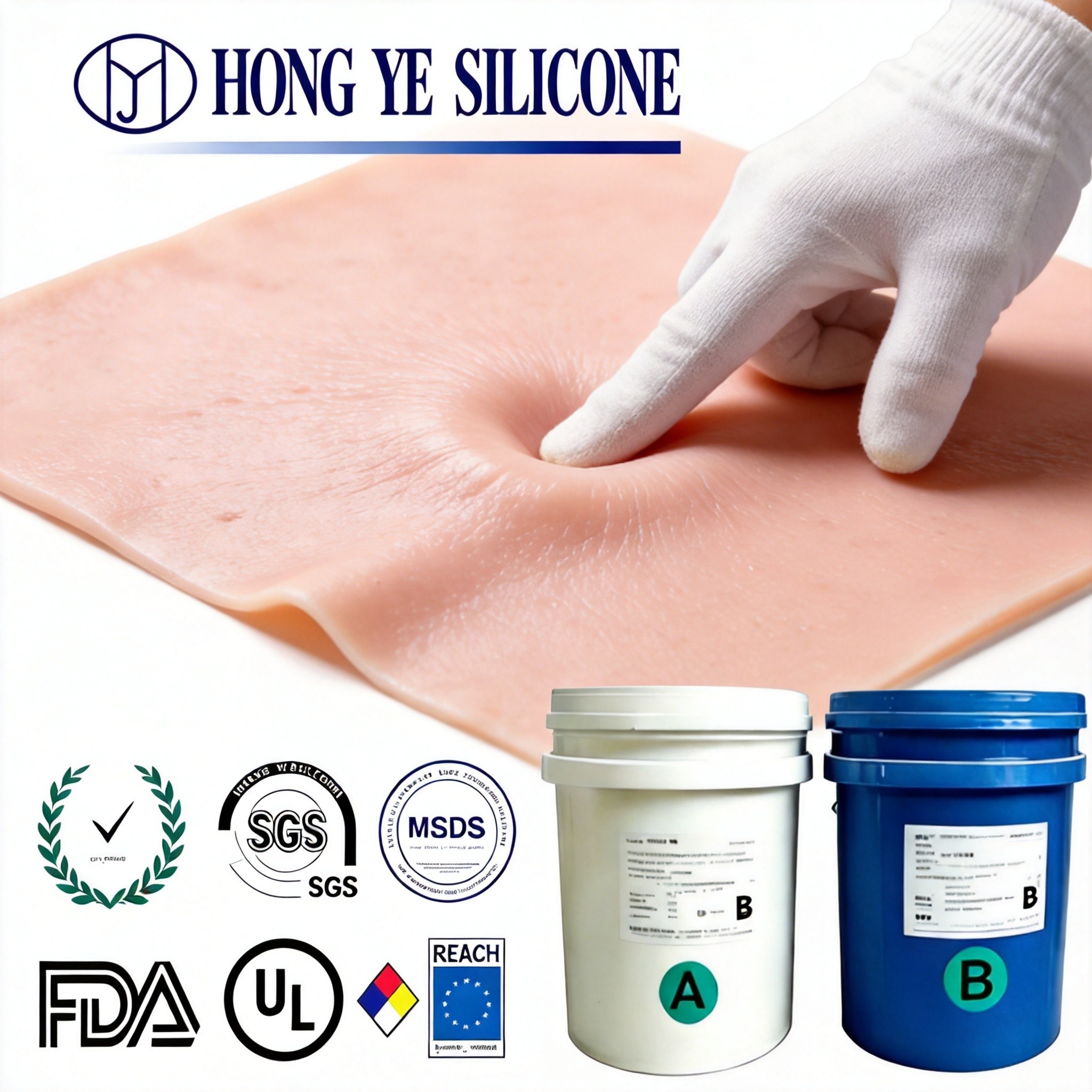
The most fundamental requirement for robot skin is that it should feel like real human skin. High-quality liquid silicone, especially in the 0–15 Shore A hardness range, replicates the softness and elasticity of human skin remarkably well. The material yields under pressure and rebounds instantly, creating a natural, lifelike touch sensation.
2. Excellent Elasticity and Tear Resistance
Robot skin must withstand repeated stretching, bending, and compression as the robot moves. Premium-grade silicone offers elongation rates of 500–800% and high tear strength, ensuring the skin remains intact and maintains its original shape even after thousands of flex cycles. This durability is critical for humanoid robots designed for long-term operation.
3. Biocompatibility and Safety
Since robot skin may come into contact with humans, especially in healthcare, elder care, and customer service applications, safety is non-negotiable. Platinum-cured silicone is non-toxic, hypoallergenic, and complies with international standards such as FDA and RoHS. Unlike cheaper tin-cured alternatives, platinum cure systems produce no harmful byproducts during curing.
4. Temperature Stability
Robots may operate in diverse environments — from cold warehouses to hot manufacturing floors. Liquid silicone maintains its physical properties across a wide temperature range, typically from -60°C to 220°C, ensuring consistent performance regardless of operating conditions.
5. UV and Weather Resistance
For robots deployed outdoors or in environments with UV exposure, silicone's natural resistance to UV radiation, ozone, and weathering ensures the skin does not degrade, discolor, or become brittle over time.
Key Properties to Consider When Choosing Robot Skin Silicone
Selecting the right silicone formulation for bionic robot skin involves balancing multiple performance parameters:
|
Property
|
Typical Range for Robot Skin
|
Why It Matters
|
|---|---|---|
|
Hardness
|
0–20 Shore A
|
Determines softness and skin-like feel
|
|
Tear Strength
|
10–25 kN/m
|
Prevents cracking under repeated movement
|
|
Tensile Strength
|
3–6 MPa
|
Resistance to breaking under tension
|
|
Elongation
|
500–800%
|
How far the material stretches before breaking
|
|
Shrinkage
|
≤ 0.1%
|
Dimensional accuracy of finished skin parts
|
|
Curing System
|
Platinum cure
|
Ensures safety, consistency, and no byproducts
|
|
Mix Ratio
|
1:1 by weight
|
Ease of processing and quality consistency
|
|
Operation Time
|
30–60 min
|
Workable window before curing begins
|
|
Color
|
Skin tone / customizable
|
Realistic appearance matching application
|
Hong Ye E-Series Silicone: The Preferred Choice for Robotics Applications
Hong Ye Silicone, a leading Chinese manufacturer with 28 years of experience in liquid silicone R&D and production, offers the E-series product line specifically designed for applications requiring exceptional softness, elasticity, and reliability.
Why Hong Ye E-Series Stands Out
✅ Wide Hardness Range — Available from 0 Shore (ultra-soft) to 65 Shore A, covering every imaginable robot skin requirement. The most popular models for bionic skin are E600, E605, E610, and E615.✅ Superior Mechanical Properties — E-series silicone delivers exceptional tear strength (≥15 kN/m) and elongation (≥600%), ensuring long-lasting performance under the demanding conditions of robotic movement.
✅ Platinum Cure System — Safe, non-toxic, and FDA-compliant, making it suitable for robots that interact with humans in healthcare, education, and service industries.
✅ Precision Consistency — With advanced automated production and strict quality control, every batch delivers identical performance, eliminating production variability for robot manufacturers.
✅ Customizable Formulations — Hong Ye works directly with robotics companies to develop custom silicone formulations tailored to specific applications, whether it's enhanced self-healing properties, special color matching, or optimized curing profiles.
✅ Global Reach — Serving over 20,000 clients in 130+ countries, Hong Ye Silicone provides reliable supply chains and technical support to robotics companies worldwide.
Applications of Bionic Robot Skin Silicone
The applications for liquid silicone robot skin are expanding rapidly across industries:
-
Humanoid Service Robots — Reception robots, restaurant servers, museum guides
-
Medical and Healthcare Robots — Patient care robots, surgical simulation trainers, prosthetic devices
-
Educational Robots — Interactive teaching companions, language learning robots
-
Industrial Collaborative Robots — Soft grippers and safe human-robot interaction surfaces
-
Entertainment and Animatronics — Theme park animatronics, movie special effects, wax figures
-
Prosthetics and Orthotics — Artificial limbs, prosthetic liners, orthopedic cushions
-
Soft Robotics — Flexible actuators, soft grippers, wearable robotic exoskeletons
Manufacturing Process Overview
Producing bionic robot skin from liquid silicone involves several key steps:
-
Formulation Design — Engineers select the appropriate hardness, additives, and color based on the robot's specific requirements
-
Color Matching — Skin-tone pigments are carefully blended to achieve the desired realistic appearance
-
Mold Fabrication — Precision molds are created using CNC machining or 3D printing based on the robot's 3D model
-
Degassing and Pouring — Mixed silicone is vacuum degassed and carefully poured into molds to eliminate bubbles
-
Curing — Silicone cures at room temperature or with controlled heat acceleration
-
Quality Testing — Each batch undergoes rigorous testing for hardness, tear strength, and biocompatibility
-
Assembly — Finished skin pieces are carefully fitted onto the robot's underlying structure
Future Trends in Robot Skin Materials
The field of bionic robot skin is evolving rapidly, and several exciting trends are shaping the future:
-
Self-healing Silicone — Next-generation formulations that can autonomously repair minor cuts and abrasions
-
Sensory Skin — Integrating pressure sensors, temperature sensors, and tactile feedback directly into the silicone
-
Smart Color Change — Silicone that can change color in response to temperature, emotion states, or environmental conditions
-
Bio-inspired Textures — More realistic skin textures including pores, wrinkles, and fingerprints
-
Sustainable Materials — Development of eco-friendly, recyclable silicone alternatives
Conclusion
Liquid silicone rubber has become the undisputed material of choice for bionic robot skin, and for good reason. Its unique combination of softness, elasticity, durability, safety, and versatility makes it ideal for the demanding requirements of humanoid robotics.For robotics companies seeking a reliable, high-performance silicone supplier, Hong Ye Silicone's E-series offers an outstanding combination of quality, customization, and value. With 28 years of expertise, 7 national invention patents, and a global client base spanning 130+ countries, Hong Ye is well-positioned to support the next generation of bionic robot innovation.Ready to find the perfect silicone for your bionic robot project? Contact Hong Ye Silicone today for a free consultation and sample testing. Our technical team will help you select the ideal formulation for your specific application requirements.
GRC Architectural Decoration Sector Sees Rising Demand for HY-E620 Silicone Solutions
EU REACH (EU 2026/1389) Tightens D4/D5 Limits for Condensation Silicone, Effective Oct 1, 2026
Related Article

Hongye Silicone updates its global sample delivery workflow to shorten preparation cycle and improve sample‑order service experience for international buyers.
Hongye Silicone Updates Global Sample Delivery Process

Common pad printing head defects including bubbles, blurred patterns, cracking and short life, with causes and solutions from making to usage.Common pad printing head defects including bubbles, blurred patterns, cracking and short life, with causes and solutions from making to usage.
Pad Printing Head Common Defect Troubleshooting Guide
This article examines market trends and demand drivers for optical laser platform vibration isolation gel, including industry growth factors, supplier selection criteria, and global adoption trends.
Optical Laser Platform Vibration Isolation Gel
Buddha craft mold silicone is a condensation‑cure RTV‑2 two‑component liquid silicone rubber, specially developed for the reproduction of Buddha statues, religious figurines and detailed sculpture crafts.
Buddha Craft Mold Silicone: High‑Detail RTV‑2 Silicone Rubber for Sculpture Reproduction