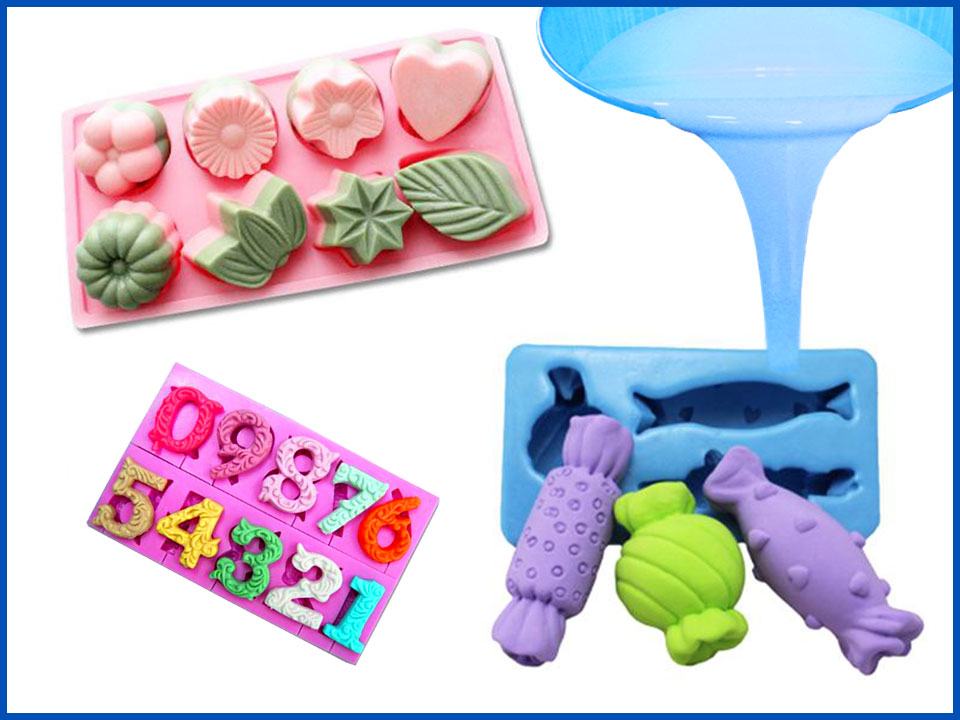
Addition-Curing Silicone for Artisan Candle & Soap Molds: Empowering Creative Entrepreneurs with Food-Grade, Long-Lasting Mold Solutions

The Rise of the Artisan Maker Economy
Over the past decade, a global shift toward handmade, natural, and personalized products has transformed the candle and soap industries from traditional commodity markets into vibrant creative ecosystems. Platforms like Etsy, Shopify, and Amazon Handmade have enabled independent makers to reach customers worldwide, while social media has amplified demand for visually striking, uniquely shaped candles and artisanal soaps. The global handmade soap market alone is projected to exceed $3.5 billion by 2028, with artisan candles growing at over 8% annually.
For these creative entrepreneurs, the mold is both a creative tool and a business asset. A mold that distorts detail, sticks to soap, or cracks after a few dozen pours directly limits production capacity and product quality. While a range of materials — including plastic, aluminum, latex, and condensation-cure silicone — have been used for candle and soap molds, addition-curing (platinum-catalyzed) silicone has emerged as the superior choice for serious makers. This article examines the technical reasons behind this shift and provides actionable guidance for selecting and using addition-cure silicone in artisan production.
Why Addition-Cure Silicone Wins for Candle & Soap Molds
1. Food-Grade Safety for Direct Product Contact Artisan soaps and candles come into direct contact with skin, bath water, and living spaces. Consumers increasingly demand products made with safe, non-toxic materials. Addition-cure silicone uses a platinum catalyst that produces no harmful by-products during cure, resulting in a mold material that is FDA-compliant for food contact, hypoallergenic, and free of the acetic acid or alcohol odors associated with condensation-cure silicone. For soap makers who market "natural" and "chemical-free" products, using a food-grade mold material is an essential part of the brand promise.
2. Exceptional Detail Reproduction Artisan candles and soaps are often sculptural — featuring botanical shapes (succulents, flowers, leaves), geometric facets, figurative designs, and intricate surface textures. Addition-cure silicone's low viscosity (12,000–30,000 cps depending on grade) allows it to flow into the finest details of a master pattern — from the delicate veins of a rose petal to the faceted surfaces of a crystal-shaped candle. The cured mold reproduces these details with sub-0.1 mm fidelity, ensuring that every cast piece matches the designer's vision.
3. Natural Release Without Additives Platinum-cured silicone has an inherently low surface energy, meaning that cured soap and wax release easily from the mold without the need for mold release sprays, oils, or powders. This is a significant advantage for soap makers, whose products are often marketed as "additive-free" — residual release agent on the soap surface would compromise the product's natural positioning. For candle makers, easy release means faster production cycles and fewer broken pieces during demolding.
4. Extended Mold Life for Business Scalability A hobbyist may pour a few candles per week, but a scaling artisan business may produce hundreds of pieces per month. Addition-cure silicone molds deliver 500–1,000+ casting cycles — compared with 50–150 cycles for latex or plastic molds and 200–400 for condensation-cure silicone. For a business producing 500 candles per month, a single addition-cure mold can last 1–2 months, reducing the total cost per piece and minimizing production downtime from mold replacement.
5. Heat Resistance for Candle and Soap Processing Soy wax, beeswax, and palm wax are typically poured at 50–80°C, while melt-and-pour soap bases reach 60–70°C. Cold-process soap generates exothermic heat during saponification, sometimes reaching 70–90°C inside the mold. Addition-cure silicone withstands continuous temperatures from -60°C to +200°C, covering the full range of candle and soap making processes without softening, deforming, or releasing chemicals into the product.
6. Transparency for Quality Control Many addition-cure silicone grades (including Hong Ye's Q-Series) are fully transparent, allowing makers to visually inspect the mold cavity for air bubbles, incomplete filling, and proper cure — a valuable quality control feature that reduces scrap and ensures consistent product quality.
Hong Ye Silicone Recommended Models for Candle & Soap Molds
表格
| Model | Hardness | Transparency | Best For |
|---|---|---|---|
| HY-Q615 | 15 Shore A | Fully Transparent | Ultra-detailed botanical shapes, delicate figurines, thin-walled candles |
| HY-E615 | 15 Shore A | Translucent | General-purpose soap and candle molds, fine texture reproduction |
| HY-E620 | 20 Shore A | Translucent | Medium-detail designs, higher-volume production, balanced durability |
| HY-E625 | 25 Shore A | Translucent | Large-format candles, heavy soap bars, high-wear production molds |
Selection Guidance:
- Fine botanical & figurative designs: HY-Q615 (fully transparent, maximum detail visibility)
- General artisan production: HY-E615 or HY-E620 (balanced detail and durability)
- Large / heavy bars & high volume: HY-E625 (structural stability, longer mold life)
- Custom colors: All models can be pigmented to match brand identity (e.g., brand-colored molds for studio display)
Common Specifications:
- Cure Shrinkage: ≤0.1%
- Service Temperature: -60°C to +200°C
- Mix Ratio: 1:1 or 10:1 (by weight)
- Pot Life @ 25°C: 45–60 minutes
- Demold Time @ 25°C: 4–6 hours (2 hours at 60°C)
- Certifications: ISO 9001, FDA, REACH, RoHS, UL, CE
Mold Fabrication Workflow for Artisan Makers
Step 1: Create or Select the Master Pattern The master pattern can be a hand-sculpted original (using polymer clay, epoxy clay, or carved wax), a 3D-printed design, or an existing object (a real shell, a vintage button, a found object). Ensure the master is clean and free of dust, grease, or uncured resin. For 3D-printed masters, post-cure under UV and seal with a clear coat to prevent platinum catalyst poisoning.
Step 2: Build a Mold Housing Create a simple containment box using cardboard, foam board, or Lego bricks — popular among artisan makers for its flexibility. Leave 8–12 mm clearance around the master for the silicone wall. Seal the base with clay or hot glue to prevent leaks.
Step 3: Apply Release Agent (If Needed) For most masters, addition-cure silicone will release without release agent. For porous materials (unsealed wood, plaster, clay), apply a thin coat of petroleum jelly or dedicated mold release. Avoid sulfur-containing products.
Step 4: Mix and Degas the Silicone Weigh Part A and Part B at 1:1 ratio. Mix slowly for 2–3 minutes, scraping the container sides and bottom. Degas in a vacuum chamber at -0.095 MPa for 2–3 minutes. For small-batch artisan makers without a vacuum chamber, mixing slowly and pouring from a height can reduce bubbles — though a vacuum chamber is strongly recommended for professional-quality molds.
Step 5: Pour and Cure Pour the degassed silicone slowly into one corner of the mold housing, allowing it to flow over the master. Cure at room temperature for 4–6 hours, or at 60°C for 2 hours.
Step 6: Demold and Trim Remove the mold from the housing, peel it away from the master, and trim any excess flash with scissors or a craft knife. The mold is ready for immediate use.
Production Tips for Scaling an Artisan Business
Batch Your Mold Making: Rather than making one mold at a time, mix larger quantities and pour multiple molds in a single session. This reduces material waste from leftover mixed silicone and improves efficiency.
Create a Mold Library: As your product line grows, organize molds by product name, creation date, and pour count. Track how many pours each mold has completed to schedule replacements before failure occurs mid-production.
Use Mother Molds for Large Designs: For large or top-heavy candle/soap designs, create a rigid support shell (plaster bandage, fiberglass, or 3D-printed shell) around the silicone mold to prevent deformation during pouring and curing.
Test New Wax/Soap Formulations: When switching to a new wax blend or soap recipe, test a small pour in an existing mold to confirm compatibility and release performance before committing to full production.
Maintain Mold Hygiene: Wash molds with warm water and mild soap between uses. Avoid abrasive scrubbers that can damage the mold surface. Store molds flat or on a support to prevent deformation.
Real-World Success Stories
Case Study 1: Botanical Candle Studio in Australia A Melbourne-based artisan candle studio specializing in hyper-realistic succulent and cactus-shaped candles struggled with condensation-cure silicone molds that tore at the delicate spine details after 30–40 pours. After switching to Hong Ye HY-Q615 fully transparent addition-cure silicone, the studio achieved 400+ pours per mold with perfect detail retention. The transparent molds also became a marketing asset — the studio shares behind-the-scenes videos of wax pouring on Instagram, showcasing the crystal-clear molds to thousands of followers.
Case Study 2: Natural Soap Brand in the United States A California-based natural soap brand producing 2,000+ bars per month needed molds that could survive daily cold-process soap pours (which generate significant exothermic heat). Their previous plastic molds warped and yellowed after 2–3 months. Hong Ye HY-E620 addition-cure silicone molds delivered 800+ pours each without deformation, and the FDA-compliant material aligned perfectly with the brand's "pure, non-toxic" marketing message. The brand calculated a 65% reduction in annual mold replacement cost.
Case Study 3: Custom Soap Atelier in France A Parisian atelier creating custom-shaped soaps for luxury hotels and corporate clients required molds that could reproduce intricate company logos and custom sculptural forms. Hong Ye HY-E615 addition-cure silicone reproduced logo details as small as 0.3 mm, enabling the atelier to deliver premium custom products with fast turnaround. The low shrinkage (≤0.1%) ensured that every custom mold matched the client's approved design dimensions.
Troubleshooting Common Issues
Issue: Bubbles on the mold surface Cause: Air entrained during mixing, or insufficient degassing. Solution: Mix more slowly. Degas for the full 2–3 minutes. For small makers without vacuum equipment, pour silicone in a thin stream from height, and tap the mold housing firmly on the work surface to release trapped air.
Issue: Soap or candle sticks in the mold Cause: Mold not fully cured, surface contamination, or incompatible fragrance oil. Solution: Ensure mold is fully cured (6+ hours at 25°C). Wash mold before first use. Some fragrance oils can affect silicone release — test new fragrances in a small area first.
Issue: Mold deforms or stretches during demolding Cause: Silicone wall too thin, or hardness too low for the design. Solution: Increase wall thickness to 10–12 mm for large designs. Use a harder grade (HY-E620 or HY-E625) for heavy or large pieces. Add a rigid mother mold for support.
Issue: Silicone does not cure fully Cause: Platinum catalyst poisoning from the master material (sulfur clay, latex, uncured 3D printer resin). Solution: Seal porous or suspect masters with a clear barrier coat. Use dedicated mixing tools for addition-cure silicone. If poisoning occurs, clean the master thoroughly and remake the mold.
Issue: Faint or missing detail on cast pieces Cause: Master pattern surface not smooth enough, or silicone viscosity too high for the detail. Solution: Polish and seal the master to a smooth finish. Use a lower-viscosity grade (HY-Q615 or HY-E615) for ultra-fine details. Ensure silicone is fully degassed before pouring.
Certifications and Quality Assurance
All Hong Ye addition-cure silicone products undergo rigorous batch testing for viscosity, hardness, tear strength, tensile strength, elongation, and cure shrinkage. Certificates of Analysis (COA) are available with every order. For artisan makers selling into regulated markets, Hong Ye's certifications provide confidence and documentation:
- ISO 9001:2008 — Quality Management System
- FDA — Food Contact Material Compliance (21 CFR)
- REACH — EU Chemicals Registration
- RoHS — Restriction of Hazardous Substances
- UL — Safety Recognition
- CE — European Conformity
Conclusion
The artisan candle and soap boom shows no signs of slowing, and the makers who will thrive are those who combine creative vision with reliable, scalable production tools. Addition-curing silicone — with its food-grade safety, exceptional detail reproduction, natural release properties, and long mold life — is the foundational tool that enables creative entrepreneurs to turn artistic passion into sustainable businesses.
For makers evaluating mold materials, Hong Ye Silicone recommends starting with a sample kit containing HY-Q615 (fully transparent, ultra-fine detail) and HY-E620 (general-purpose, balanced durability), testing both with representative designs before scaling production. The modest investment in premium addition-cure silicone pays for itself through reduced scrap, fewer mold replacements, and — most importantly — products that delight customers and build brand loyalty.
Shenzhen Hong Ye Jie Technology Co., Ltd. has supplied addition-cure silicone to artisan makers, small batch producers, and large manufacturing operations across 138+ countries since 1998. Our technical team provides formulation guidance, mold-making workshops, and custom color/hardness development for artisan businesses of all sizes.

HONG YE SILICONE Anti-fatigue Foaming Silicone Delivers Stable Performance Under Repeated Compression
Comparing Material Options for Animatronics: Prosthetic silicone vs Alternatives
Related Article