Professional Candle Mold Silicone Supplier Which to Trust 2026
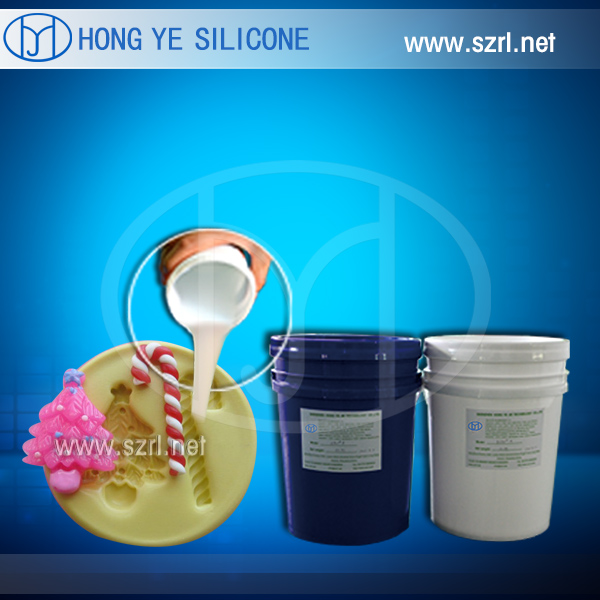
A candle maker orders silicone, pours a set of moulds, and watches the wax bring up the folds of a rose that were sharp in the original. Two weeks later the same mould has gone dull, and the supplier says the rubber was fine. Sometimes it was. More often the grade was chosen for the price of the drum rather than for what a candle mould actually does.
Candles are unfussy about chemistry and fussy about surface. The wax is poured warm, it sets hard, and it pulls away from the cavity with whatever surface the silicone gave it. That is the whole job: hold the detail, release it cleanly, and keep doing it hundreds of times.
What a candle mould asks of the rubber
Softness comes first. Candle moulds usually sit between 10 and 20 Shore A. A soft rubber lets a thin petal or a narrow fluted section come away without tearing, and it can be released by hand without the leverage that cracks a brittle mould. Firmer grades are for structural panels, not for a rose.
Second is release behaviour. A platinum cured silicone forms no by-products during cure, so the master stays clean and the cured rubber keeps its dimensions. Over a long mould-making run, that stability is what keeps the tenth mould looking like the first.
Third is temperature habit. Wax is poured at a modest temperature compared with metal casting, and a mould in the 10 to 20 Shore A band handles that comfortably, provided the supplier's stated service range covers it and the maker does not overheat the pour out of impatience.
Fourth is documentation. Cosmetic and personal care products increasingly arrive with questions attached. If your candles or soaps carry a claim about contact materials, you want a supplier who can name the certifications that apply to the model you bought, not a folder of documents for a different product line.
Questions that separate suppliers
What is the hardness, in Shore A? A number, not an adjective.
Which certifications cover this model? ISO 9001, RoHS, REACH, FDA, UL and CE are the ones that come up, and it matters that they map to your product group.
Do you keep a sample from each batch? Traceability is the difference between a supplier who can investigate a dull mould and one who can only apologise.
What is the smallest trial order? If you cannot test on your own master first, all the risk is yours.
Can the hardness be tuned? A range of 10 to 50 Shore A lets you move from a candle to a plaster plaque without changing supplier.

Three supplier profiles, compared
| Dimension | Reseller | Small mixing workshop | Manufacturer with in-house compounding |
|---|---|---|---|
| Material origin | Bought and resold | Base material bought in | Formulated on site |
| Hardness advice | Reads from a sheet | Practical but limited range | Matched to your master |
| Batch consistency | Depends on the maker | Shifts between lots | Sampled and released per batch |
| Certification coverage | Passes on the maker's file | Narrow | Issued for the product group |
| Trial order | Often tied to a full drum | Possible, stock dependent | Small trial with a pre-production cast |
| If the mould dulls | Everyone waits on a third party | Hard to investigate | Batch can be re-checked |
Resellers are not the problem in themselves. If you buy one standard grade in steady volume, buying through a reseller is efficient. The difficulty starts when the requirement shifts: a new mould with finer relief, a client asking for a document, a colour change your retail line needs.
Small workshops offer flexibility that factories sometimes cannot match on a ten kilogram order. Their exposure is consistency, because small-lot mixing lives and dies by how carefully somebody weighs and stirs. For a mould that has to run for a season rather than a weekend, that variation shows up as uneven surface after a few hundred pulls.
Matching grade to product
Tealights and simple pillars are forgiving. A 15 Shore A mould releases by hand and holds a smooth wall.
Intricate florals, embossed designs and wax melts want the softer end, around 10 to 15 Shore A, where the rubber can move out of a deep relief without tearing the tip.
Soap, plaster and resin pieces made from the same master often work in the 15 to 25 Shore A band, trading a little softness for a mould that keeps its shape between pours.
A trial that predicts dull moulds
Order a small quantity and pour a mould from the master you actually sell. Then compare the third pull against the first, not the first against the catalogue photo. Look at four things: whether the finest relief still reads, whether the surface has a sheen change, whether the mould returns to shape after demoulding, and whether the release needed more force on the third pull than the first.
Keep a cured offcut. When the next delivery arrives, compare hardness and feel. That single habit catches more batch drift than any certificate.
For makers who need both softness and paperwork, a manufacturer with its own compounding is usually the steadier partner. HONG YE SILICONE produces addition curing mould silicone in the HY-E series from 10 to 50 Shore A, offers 1:1 and 10:1 mix ratios, retains batch samples for traceability, and issues ISO 9001, RoHS, REACH, FDA, UL and CE documents by model where they apply. Export trial orders start at 10kg, and a pre-production cast on your own master is part of the process rather than an exception.
If a mould has gone dull and you want to know whether the rubber or the process is responsible, compare the current batch against your retained offcut, then cast a small section one step softer. Ask for the model that fits your candle or soap line and cast it before the production run, not after.
Wearable Medical LSR Optimized for Continuous Health Monitoring Devices
High-Humidity Gel Sealing for Food Plant AHU and Cooling Coil Filters
Related Article