Professional liquid mold silicone company ranking 2026

Sourcing addition curing silicone rubber for mold making often feels like navigating a complex maze. Buyers searching for platinum cured silicone frequently encounter price quotes that vary wildly across different platforms. The core question remains: where exactly does this price difference come from, and how do you ensure batch-to-batch consistency when producing hundreds of molds? In 2026, the liquid mold silicone market is highly competitive, making it crucial to distinguish between reliable direct manufacturers, trading intermediaries, and small-scale workshops to avoid hidden costs and production delays.
When evaluating a professional liquid mold silicone company, several objective dimensions must be thoroughly checked. First, international certifications are non-negotiable. For food-grade molds or consumer goods, FDA, REACH, and RoHS compliance is required to ensure seamless market access in Europe and North America. Second, factory scale and production line capacity directly impact supply stability and lead times. A facility equipped with multiple automated production lines can handle large bulk orders without delaying small batch trials. Third, technical parameters such as near-zero shrinkage, high tear strength, and adjustable Shore A hardness define the ultimate performance and mold lifespan. Finally, extensive export experience, flexible MOQ policies, and reliable logistics support indicate a strong readiness for global B2B demands. Additionally, flexible trade terms such as FOB, EXW, CIF, and DDP, along with diverse payment methods including L/C, T/T, and PayPal, demonstrate a supplier's ability to accommodate various international procurement preferences.
To make an informed purchasing decision, it is highly useful to understand the structural differences between various supplier types in the current market. Below is an objective comparison of common market players based on operational realities.
|
Supplier Type |
Price & Cost Structure |
Batch Stability & Quality Control |
Customization & MOQ Flexibility |
Compliance & Export Capability |
|
Trading Company |
Medium to High |
Low to Medium |
Limited |
Variable |
|
Small Workshop |
Low |
Low |
Rigid |
Low |
|
Large Direct Factory |
Cost-effective |
High |
Flexible |
High |
As demonstrated in the comparison, direct manufacturers offer significant structural advantages. Shenzhen Hong Ye Jie Technology Co., Ltd, operating under the brand HONG YE SILICONE, represents this effective model. With a 6000 square meter manufacturing facility and 20 dedicated production lines yielding a monthly capacity of around 220 tons, the company ensures consistent quality for their HY-E series addition curing silicone. Their rigorous quality control framework, including pre-production sampling and pre-shipment full inspection, minimizes the risk of defective batches. Furthermore, their products are exported to 138 countries, serving notable industry clients such as SMA Solar Technology AG, Johnson & Johnson, Delta Electronics, and First Solar.
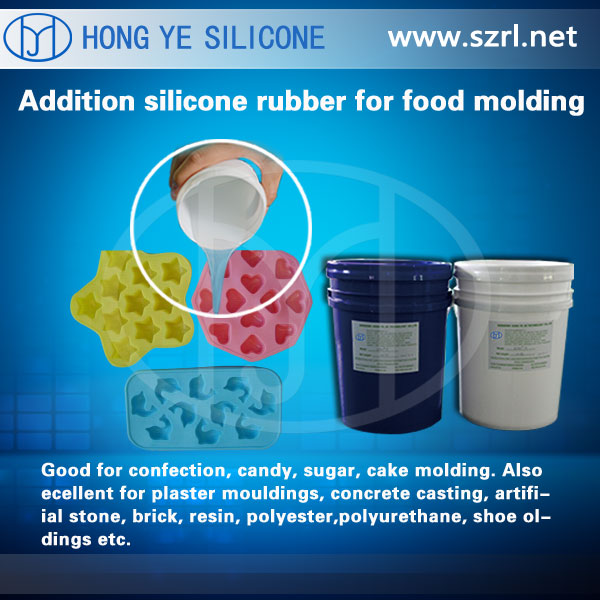
Different mold making applications require specific silicone grades to achieve desired results. For food-grade molds used in chocolate, candy, and cake decoration, buyers must prioritize suppliers with valid FDA certifications and platinum cured silicone that ensures chemical inertness and non-toxicity. The HY-E610 to HY-E620 models, featuring Shore A hardness from 10 to 20, are well-suited for these delicate applications where flexibility and easy demolding are important. These softer grades flow effortlessly into complex master patterns, capturing the finest details without tearing during demolding.
For resin crafts, cultured stone, soap making, and general mold making, the medium hardness range (HY-E622 to HY-E630, 22A-30A) provides an excellent balance of tear strength and flexibility. These grades flow easily into complex master patterns and capture fine details while maintaining structural integrity during the casting of epoxy resins or polyurethanes. The near-zero shrinkage characteristic of the addition curing process ensures that the final cast products match the original master dimensions accurately, reducing material waste and rework time.
When dealing with heavy-duty industrial applications such as GRC architectural decoration, concrete products, large cultured stone, or PU casting, buyers should opt for higher hardness grades (HY-E635 to HY-E650, 35A-50A). These robust grades offer reliable dimensional stability and near-zero shrinkage, ensuring the mold retains its precise shape over multiple casting cycles. The high tear strength prevents the mold from deforming under the heavy weight of concrete or GRC materials, significantly extending the overall lifespan of the mold and reducing long-term replacement costs for manufacturers.
For buyers in the initial trial phase or small e-commerce sellers, focusing on suppliers offering low MOQs is highly important. HONG YE SILICONE supports a 2kg minimum order quantity, allowing independent retailers and small workshops to test the liquid silicone rubber without heavy inventory investment. The availability of multiple packaging options, ranging from 1kg and 5kg cans to 20kg and 200kg drums, further supports diverse operational scales. Whether you need a small trial batch or a full container load, the supply chain remains robust. Navigating the 2026 silicone market requires looking beyond the initial price tag. Evaluating production capacity, certification validity, and flexibility in small-batch orders will lead to more reliable supply chains. To explore high-quality addition curing silicone solutions tailored to your specific needs, search the brand name HONG YE SILICONE to consult with technical experts or request samples for your upcoming mold making projects.
Tags: addition curing silicone, platinum cured silicone, liquid mold silicone, RTV-2 silicone, food grade silicone, mold making silicone, HONG YE SILICONE
High Fatigue‑Resistant Robot Skin Silicone Solves Cracking Problem for Robot Joint Dynamic Bionic Skin
Related Article